
.png)

%20(1).png)
The Knowledge Walking Out the Gate: Preserving Engineering Expertise in Modern Mining
Discover how mining companies can preserve engineering expertise and enhance operational efficiency through effective knowledge management strategies.
-1.png?width=40&name=Empowering%20Transformation%20-%20logo%20transition%20animation%20(7)-1.png)
SolidCAD 14 Aug 2026
The Knowledge Walking Out the Gate: Preserving Engineering Expertise in Modern Mining
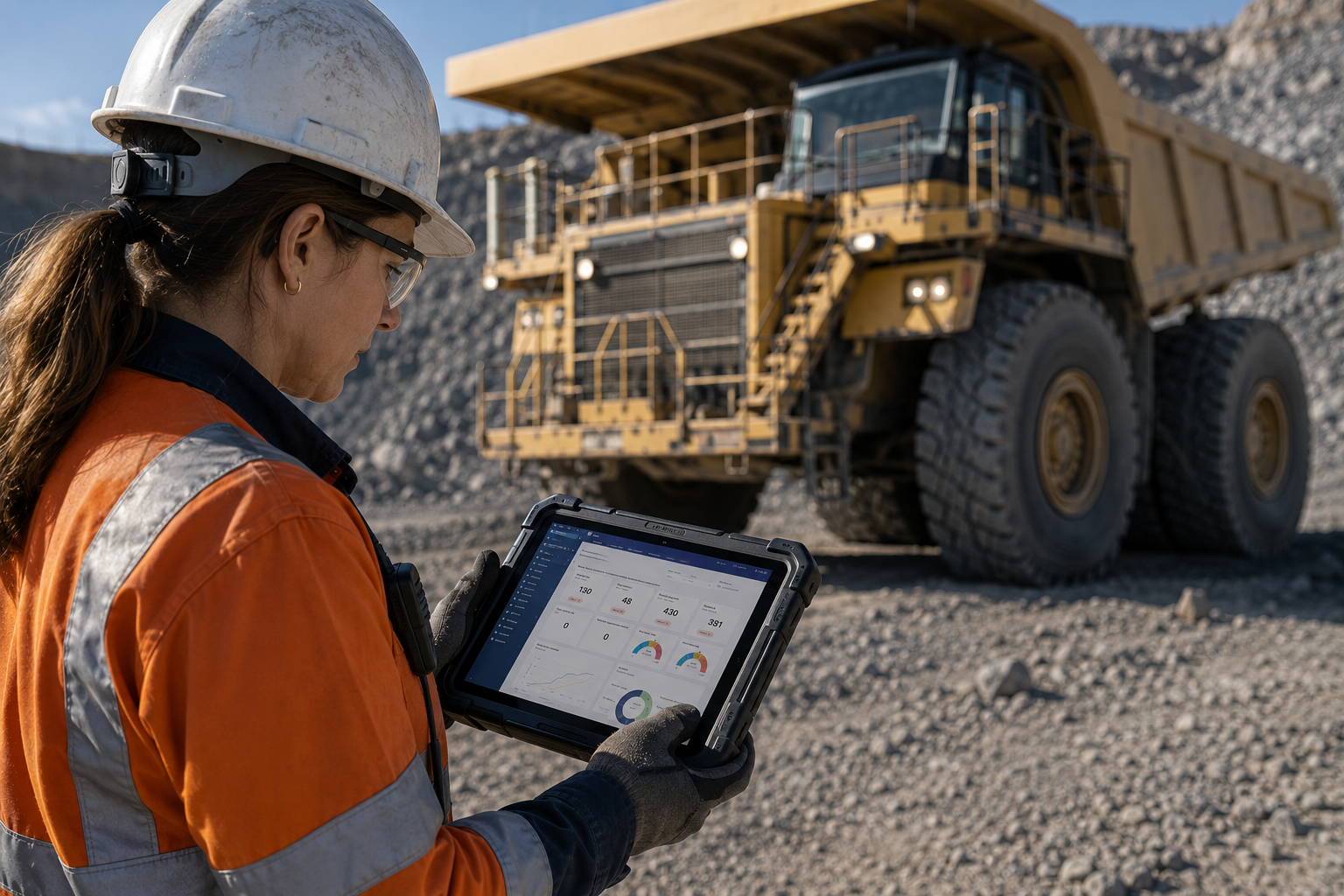
Mining has always been an industry built on experience. While technology has transformed how ore is extracted, processed, and transported, many of the most important operational decisions are still guided by people who have spent decades learning the unique characteristics of a site. They know which pump requires extra attention during the spring thaw, why a conveyor was rerouted years ago, or which electrical modification was made during an expansion project that never made it into the original design documentation.
This institutional knowledge is invaluable. Yet across the mining industry, organizations are facing a growing challenge: much of that knowledge exists only in the minds of experienced employees. As retirements accelerate and workforce mobility increases, decades of engineering expertise risk leaving the organization with little more than a farewell handshake.
The consequences are rarely immediate. Production doesn't stop the day a senior engineer retires. Instead, the effects emerge gradually. Maintenance teams begin asking more questions. Engineers spend additional time investigating past decisions. Contractors repeat work that had already been solved years earlier. Projects take longer because historical context has disappeared.
Small inefficiencies accumulate until they become a measurable impact on productivity, safety, and operational costs.
Why Tribal Knowledge Is a Growing Risk
This challenge is often referred to as "tribal knowledge," but the term understates its importance. In reality, it represents years of engineering decisions, operational improvements, lessons learned, and practical experience that directly influence how a mine operates.
Consider a processing plant that has undergone multiple upgrades over the past twenty years. Equipment has been replaced, process lines have been rerouted, and electrical systems have been expanded to accommodate new production requirements. On paper, the documentation may appear complete, but much of the reasoning behind those decisions often resides with the engineers and maintenance supervisors who managed the work.
They know why one design option was rejected, why a specific valve was relocated, or why a particular maintenance procedure evolved over time. Without that context, future teams are forced to rediscover the same information through investigation, trial, and error.
The problem becomes even more pronounced during capital projects and equipment upgrades. Engineering consultants may receive a complete package of drawings, yet still spend considerable time verifying existing conditions because historical modifications are difficult to trace. Maintenance planners may question whether equipment records are current, while operations personnel rely on conversations rather than documented information to understand how systems actually function.
Turning Expertise into Organizational Knowledge
Digital transformation has given mining companies an opportunity to address this issue—not by replacing experienced employees, but by ensuring their knowledge becomes part of the organization's permanent operational record.
This is where engineering information management platforms such as Accruent Meridian provide value far beyond document control. While Meridian serves as a centralized repository for engineering drawings and technical documentation, it also captures the history surrounding every engineering change. Revision histories, approval workflows, markups, and supporting documentation create a complete audit trail that explains not only what changed, but when, how, and why those changes occurred.
Rather than storing engineering documents as static files, Meridian preserves them as living records that continue to evolve alongside the operation. Every approved drawing revision, equipment modification, and Management of Change (MoC) process becomes part of a structured knowledge base that future engineers can access with confidence.
Supporting Workforce Transitions
This continuity becomes particularly valuable during workforce transitions. When experienced personnel retire or move into new roles, incoming engineers inherit more than a collection of PDFs and disconnected project folders.
They gain access to documented engineering decisions, current asset information, historical revisions, and supporting documentation that provides context for the systems they are responsible for maintaining.
The benefits extend well beyond engineering departments:
- Maintenance planners can quickly understand previous equipment modifications before scheduling repairs.
- Reliability teams can review historical documentation when investigating recurring failures.
- Contractors receive current information without relying on informal communication or outdated document packages.
- Everyone works from the same trusted source of engineering information.
Improving Safety Through Better Information
Knowledge retention also supports one of mining's most important priorities: safety.
Outdated drawings or undocumented field modifications can introduce unnecessary risks when personnel perform maintenance or isolation procedures. By maintaining controlled documentation and complete revision histories, organizations reduce the likelihood that critical work will be performed using incomplete or obsolete information.
Building a More Resilient Mining Operation
As mining operations become increasingly complex, preserving engineering knowledge is no longer simply about protecting historical records. It is about enabling faster decision-making, improving collaboration, and reducing operational risk across the entire asset lifecycle.
The industry's workforce will continue to evolve. Experienced employees will retire, new engineers will join the organization, and operations will continue expanding through new projects and acquisitions.
The organizations best positioned for the future will not necessarily be those with the most experienced workforce at any given moment. They will be the ones that have successfully transformed individual expertise into organizational knowledge.
Engineering information should not disappear when someone leaves the site for the last time. It should remain accessible, searchable, and trusted by every engineer, planner, and maintenance technician who follows.
By capturing knowledge as part of a structured engineering information management strategy, mining companies ensure that decades of experience continue creating value long after the people who built that experience have moved on.
In an industry where every decision affects safety, productivity, and operational continuity, preserving engineering knowledge may be one of the most important investments a mining organization can make—not just for today's workforce, but for every generation that follows.
Unlock expert insights: connect with SolidCAD today!
Discover how SolidCAD Insights can accelerate your business growth and transformation. From industry trends to practical strategies, our experts are here to help. Contact us today to discuss your needs and explore solutions tailored to your business.
%20(3).png)