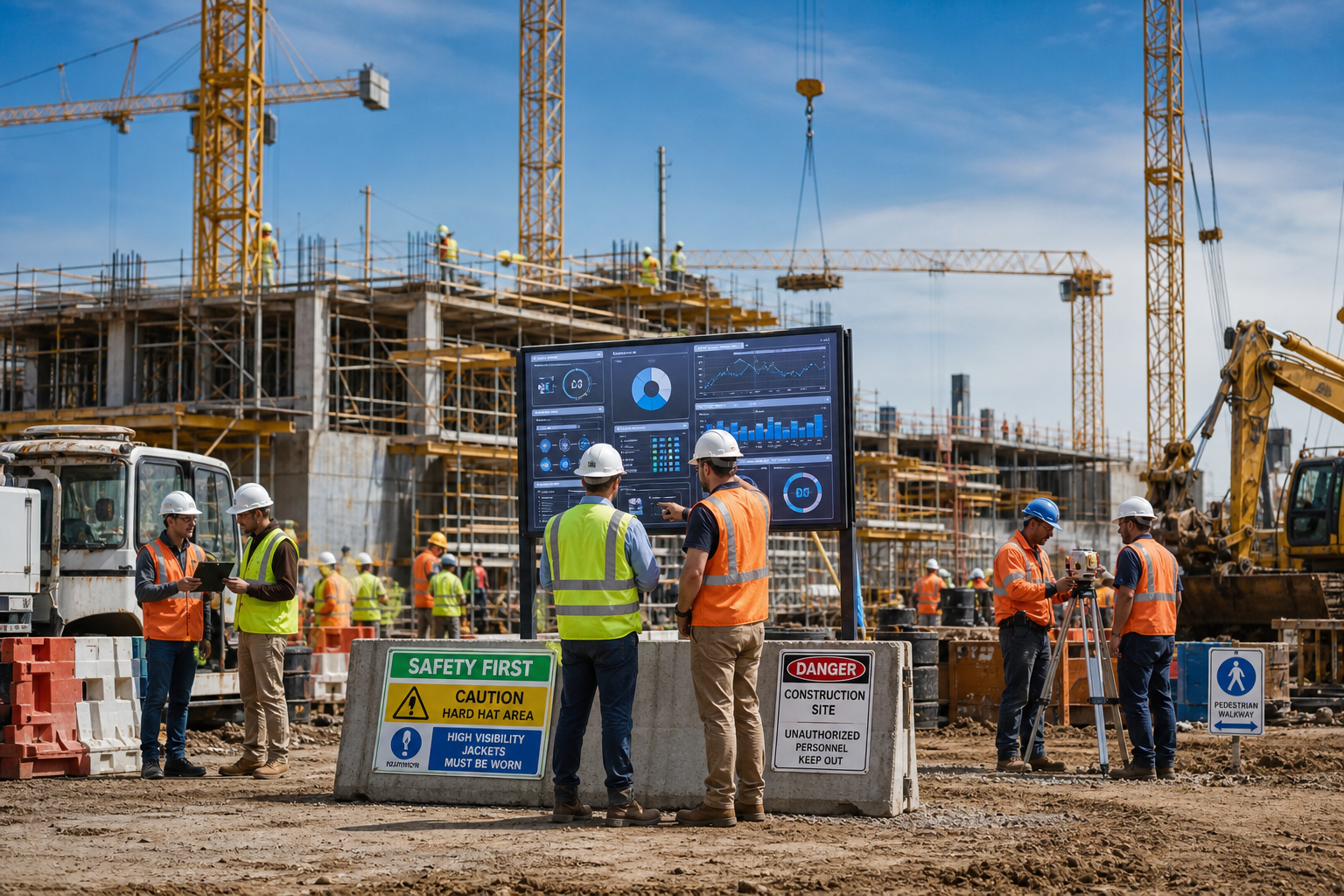
If you are responsible for safety on a major capital project, the project you are managing six months from now may barely resemble the one you are managing today. Contractors arrive and leave. The workforce expands and contracts. Construction moves through different phases. New hazards emerge as structures, systems and equipment take shape. Through every transition, the safety program is expected to remain consistent.
That is difficult when almost everything else is changing.
The larger the project becomes, the easier it is for safety information to fragment along organizational lines.
Each contractor may know its own workers. Each supervisor may understand their section of the site. Each project team may maintain its own records.
But someone still needs to understand the complete safety picture.
Project Scale Creates Information Scale
Large capital projects generate documentation at the same scale as the physical work.
Inspections, orientations, certifications, hazard assessments, corrective actions and contractor records accumulate every day.
The challenge is not simply storing all of that information. It is maintaining enough structure to use it.
When safety records are scattered between paper, email, spreadsheets and separate contractor systems, project teams can spend significant effort trying to determine what is current and what still requires action.
A connected workflow can help transform that volume of information into a more manageable safety process.
Every Contractor Should Enter the Same Safety Framework
Contractors bring specialized expertise to a project, but they can also bring different working methods and documentation practices.
Without a common framework, the project's safety program can begin to fragment.
One contractor handles an issue one way. Another documents it differently. A third relies on its own internal process.
A digital safety platform can help establish common expectations for inspections, hazard reporting, corrective actions and documentation across the project.
The contractors may change. The project's fundamental safety process does not have to.
Safety Must Survive Every Project Phase
Capital projects evolve.
The hazards present during excavation are different from those during structural work. Mechanical and electrical installation introduces another set of activities. Commissioning changes the environment again.
A safety program needs to evolve with those phases without losing continuity.
Connected safety records give project teams a history that extends beyond the current stage of construction.
That history can help teams understand recurring issues, monitor outstanding actions and maintain documentation as responsibility moves between contractors, supervisors and phases.
Corrective Actions Cannot Disappear Between Teams
Complex projects create countless handoffs.
Those handoffs create opportunities for information to disappear.
A hazard identified by one contractor may require action from another team. An inspection finding may affect work scheduled later. A corrective action may remain open as responsibility shifts.
This is where tracked corrective actions become particularly important.
By creating clear ownership and status, project teams gain a better way to understand what remains unresolved.
Safety becomes less dependent on someone remembering to follow up.
Give Project Leadership a View Across the Entire Build
Project executives do not need every individual form.
They need to know whether the safety process is working.
Where are recurring issues appearing? Are corrective actions being closed? Are contractors following required processes? Are particular project phases creating new patterns of risk?
Connected reporting can give leadership a broader view while allowing safety professionals to investigate the detail behind those signals.
The result is a safety program capable of operating at the same scale as the project itself.
Frequently Asked Questions
Why is safety management difficult on large capital projects?
Large projects involve changing contractors, workforces, project phases and hazards, creating substantial coordination and documentation requirements.
How can safety processes remain consistent across contractors?
Organizations can establish common digital workflows for inspections, hazard reporting, corrective actions and documentation that apply across the project.
Why is corrective action tracking important on large projects?
Tracked corrective actions create clearer ownership when resolving an issue requires coordination between multiple teams or contractors.
How does connected safety data help project leadership?
Connected data can provide broader visibility into recurring issues, outstanding actions and process consistency without requiring leaders to review individual forms manually.
One Project Needs One Safety Picture
A major capital project may involve hundreds of people and dozens of companies, but its safety performance ultimately has to be understood as a whole.
SiteDocs helps connect field inspections, hazard assessments, corrective actions, certifications and compliance information across the project, giving teams a more consistent foundation as the workforce and work itself continue to change.
Talk to SolidCAD about SiteDocs and explore how a connected safety environment can help maintain visibility, accountability and consistency throughout the lifecycle of your next major capital project.