
.png)

%20(1).png)


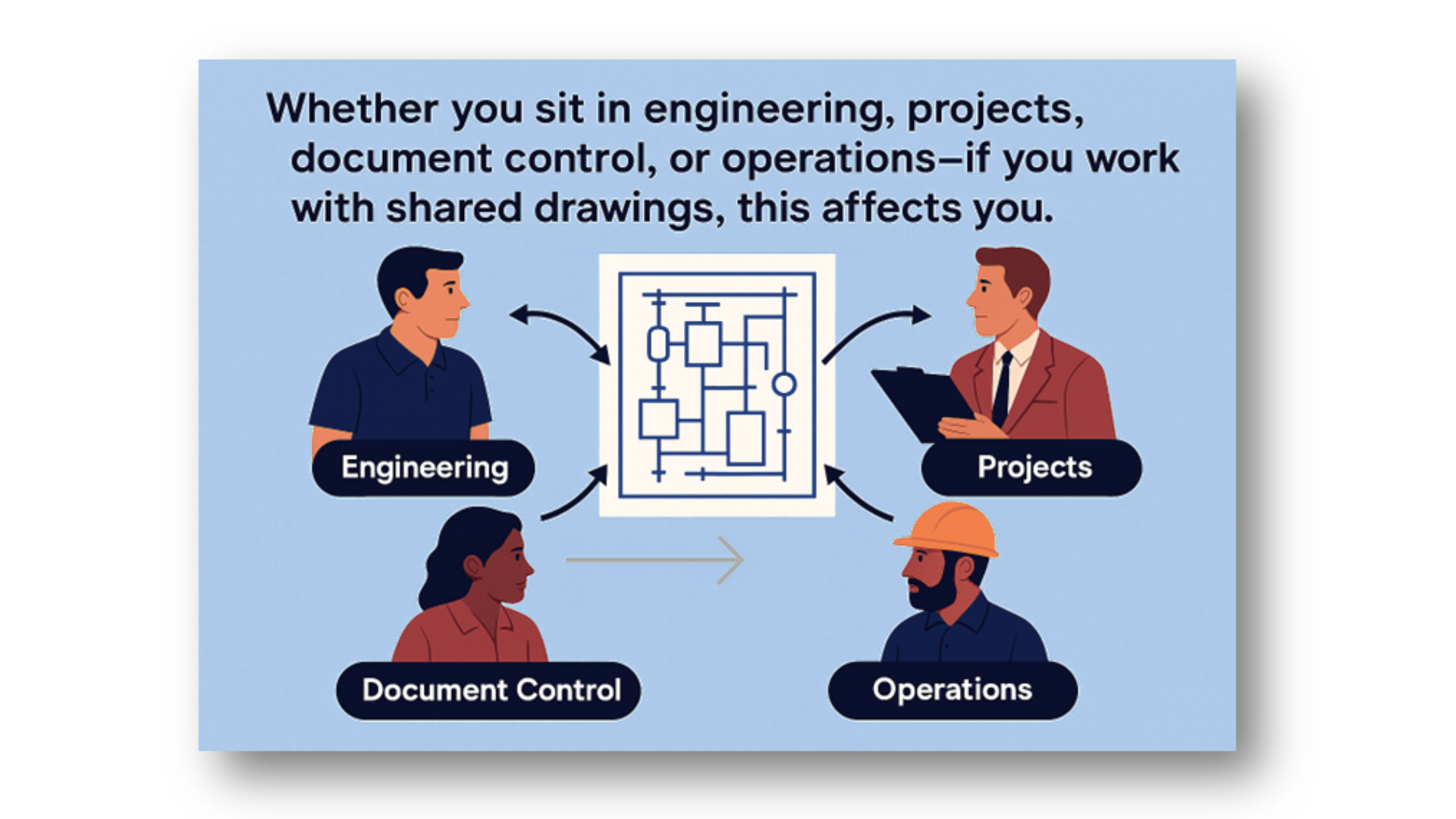
Whether you sit in engineering, projects, document control, or operations — if you work with shared drawings, this affects you.
“Concurrent engineering” gets mentioned a lot in oil & gas, but often without a shared understanding of what it means.
For some, it’s about speed. For others, it’s about collaboration.
And for many, it’s a concern — how do we move faster without losing control?At its core, concurrent engineering is the ability for multiple disciplines, projects, and teams to work in parallel on shared assets — without creating rework, risk, or confusion.
In oil & gas, where facilities live for decades and projects rarely exist in isolation, this is no longer a “nice to have.” It’s a necessity.
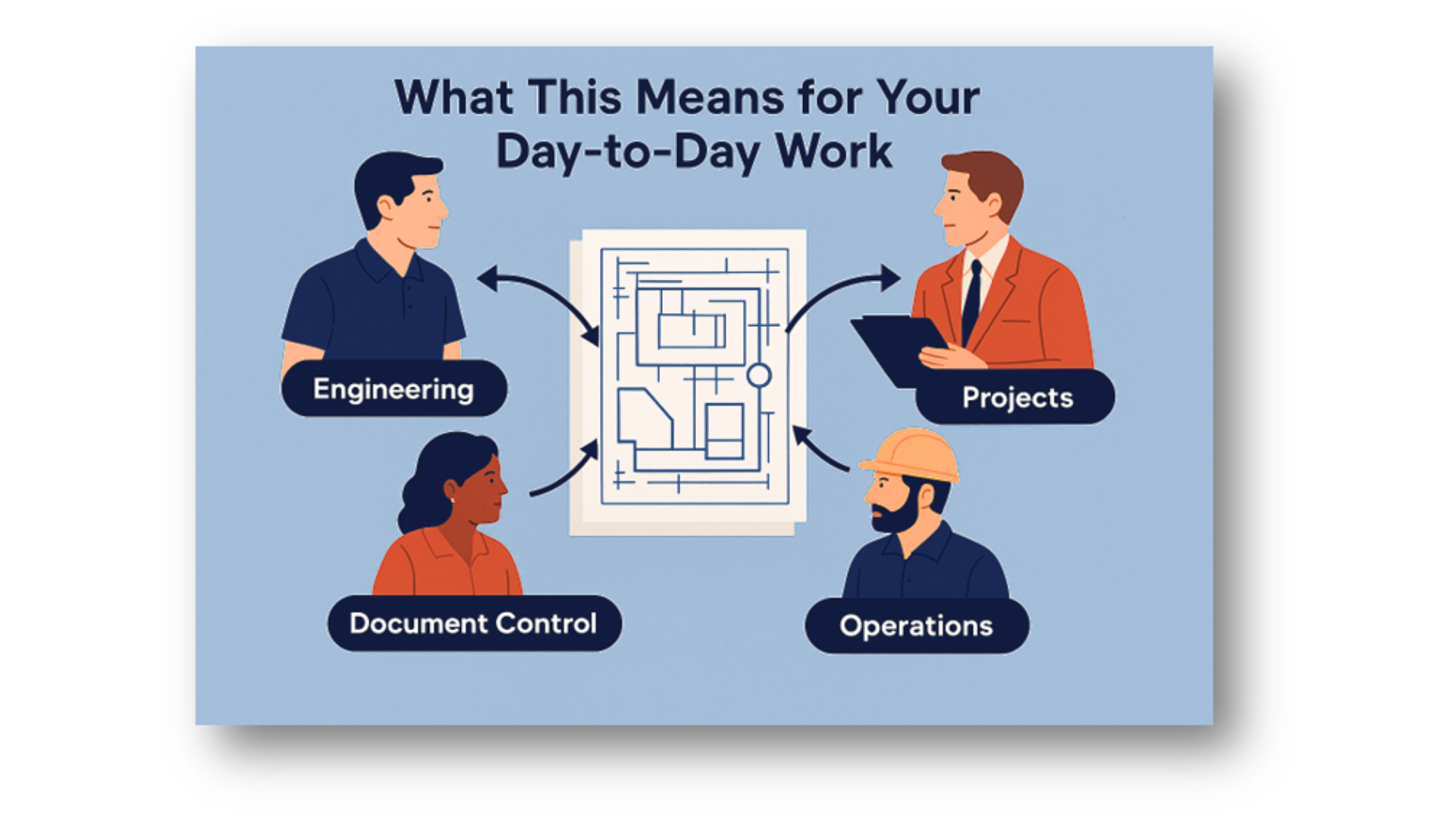
What This Means for Your Day-to-Day Work
Concurrent engineering isn’t an abstract strategy — it shows up in everyday decisions.
- If you’re in engineering, it means designing while upstream and downstream teams are already relying on your work.
- If you’re in projects, it means moving forward without waiting for a single “final” issue.
- If you’re in document control, it means protecting information integrity while multiple teams need access at the same time.
- And if you’re in operations, it means trusting that the drawings you’re using reflect reality — even while change is happening.
The common thread is shared drawings. When multiple teams depend on the same information at the same time, the question isn’t whether concurrency will happen — it’s whether it’s controlled or accidental. This is why concurrent engineering now affects everyone who touches technical information, not just project teams.
The Reality: Oil & Gas Was Built for Sequential Work
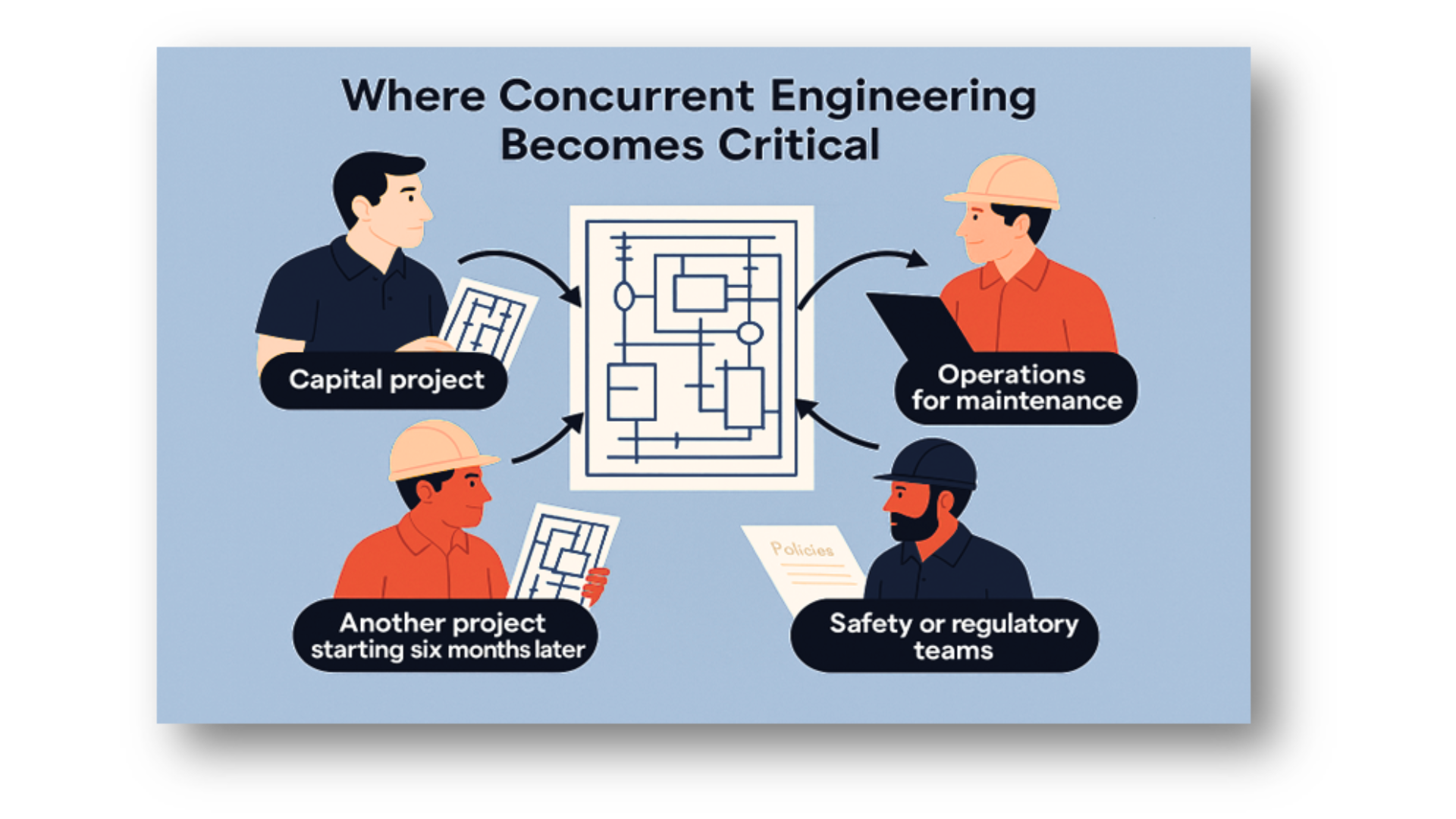
Historically, oil & gas engineering followed a linear model:
- Engineering completes design
- Documents are issued
- Construction executes
- Operations take over
That model worked — when projects were greenfield, timelines were generous, and operational changes were minimal.
Today, that reality no longer exists.
- Brownfield projects dominate
- Facilities remain live during capital work
- Operations can’t “wait” for engineering to finish
- Multiple projects often touch the same drawings at the same time
Yet many organizations still rely on sequential processes and document controls that assume only one team is working at a time.
A Practical Example of Where Sequential Thinking Breaks
Consider a typical brownfield scenario:
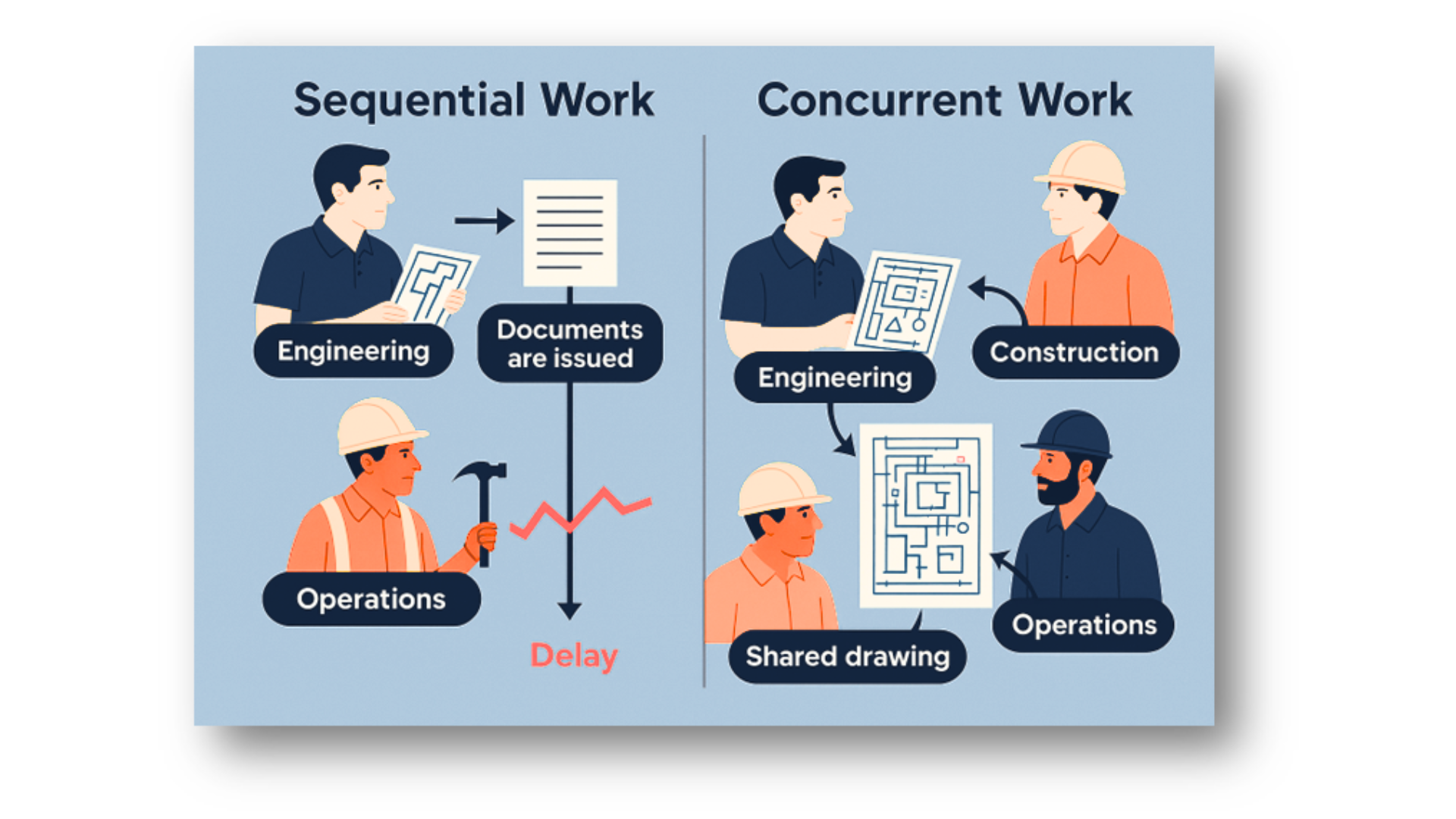
A capital project updates a P&ID to support new equipment, while operations simultaneously reference that same drawing for maintenance planning — and another project is already scoped using a previous revision.
In a sequential model, only one of those activities is considered “allowed” at a time. Everyone else waits — or quietly makes a copy.
That’s where problems begin:
- Copies drift out of sync
- Revisions lose lineage
- Teams stop trusting the system and start trusting personal folders instead
Sequential processes don’t fail because people ignore them. They fail because modern oil & gas work no longer fits inside them.
Capital and Operations Are No Longer Separate Worlds
One of the biggest shifts in modern oil & gas is the blurring line between capital projects and operations.
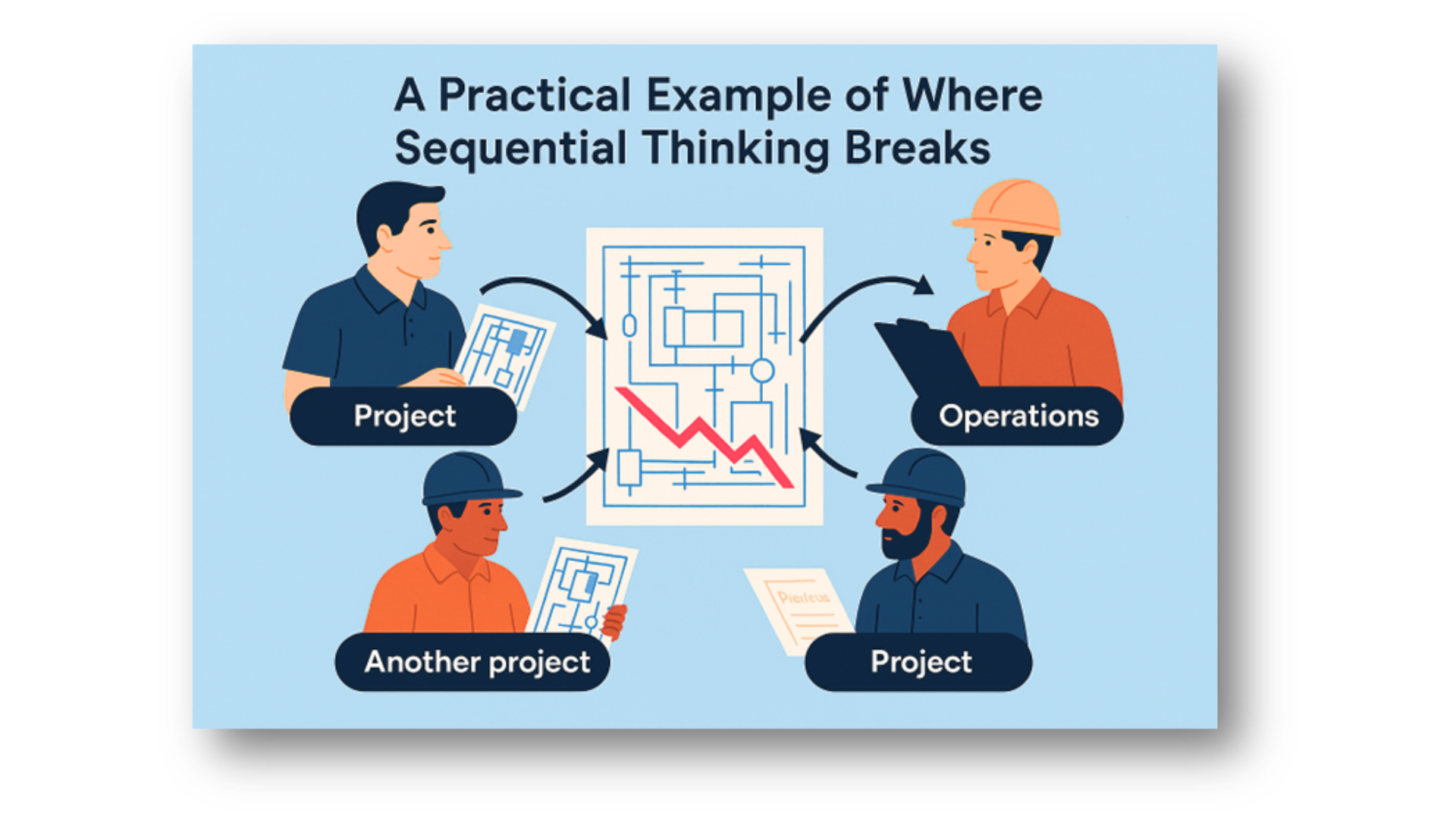
A single P&ID or layout drawing might be:
- Updated by a capital project
- Referenced by operations for maintenance
- Required by safety or regulatory teams
- Used by another project starting six months later
This overlap is now the norm — not the exception.
When teams are forced to work sequentially in this environment, the result is:
- Delays while teams “wait their turn”
- Local copies of drawings
- Conflicting revisions
- Increased rework and operational risk
This is exactly where concurrent engineering becomes critical.
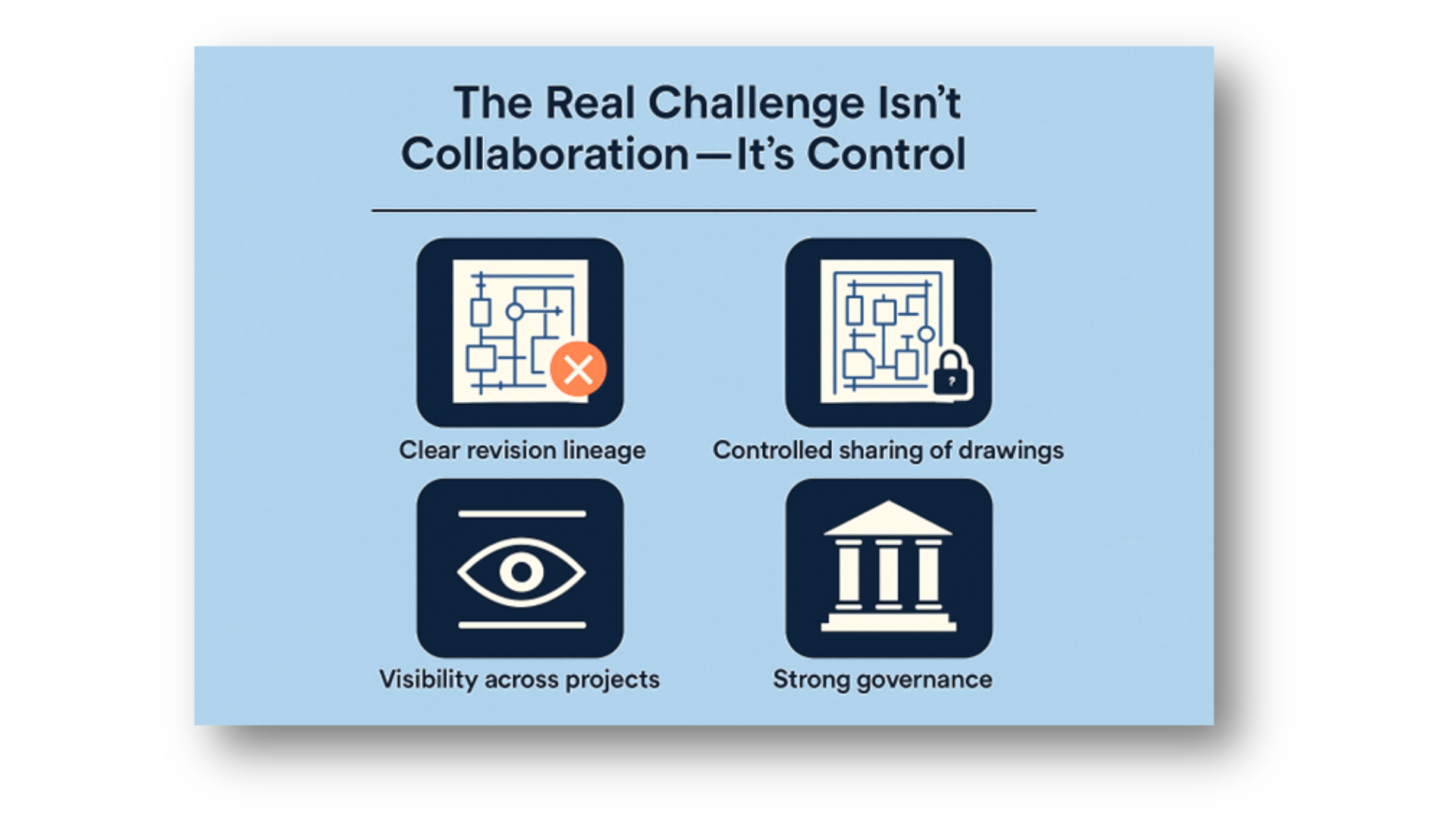
The Real Challenge Isn’t Collaboration — It’s Control
Most oil & gas organizations want teams to collaborate.
The hesitation comes from a valid concern:
“If everyone works at the same time, how do we maintain control?”
This is where many concurrent engineering initiatives fail — not because the concept is flawed, but because the information foundation isn’t ready.
Without:
- Clear revision lineage
- Controlled sharing of drawings
- Visibility across projects
- Strong governance
“Concurrent” quickly turns into “chaotic.”
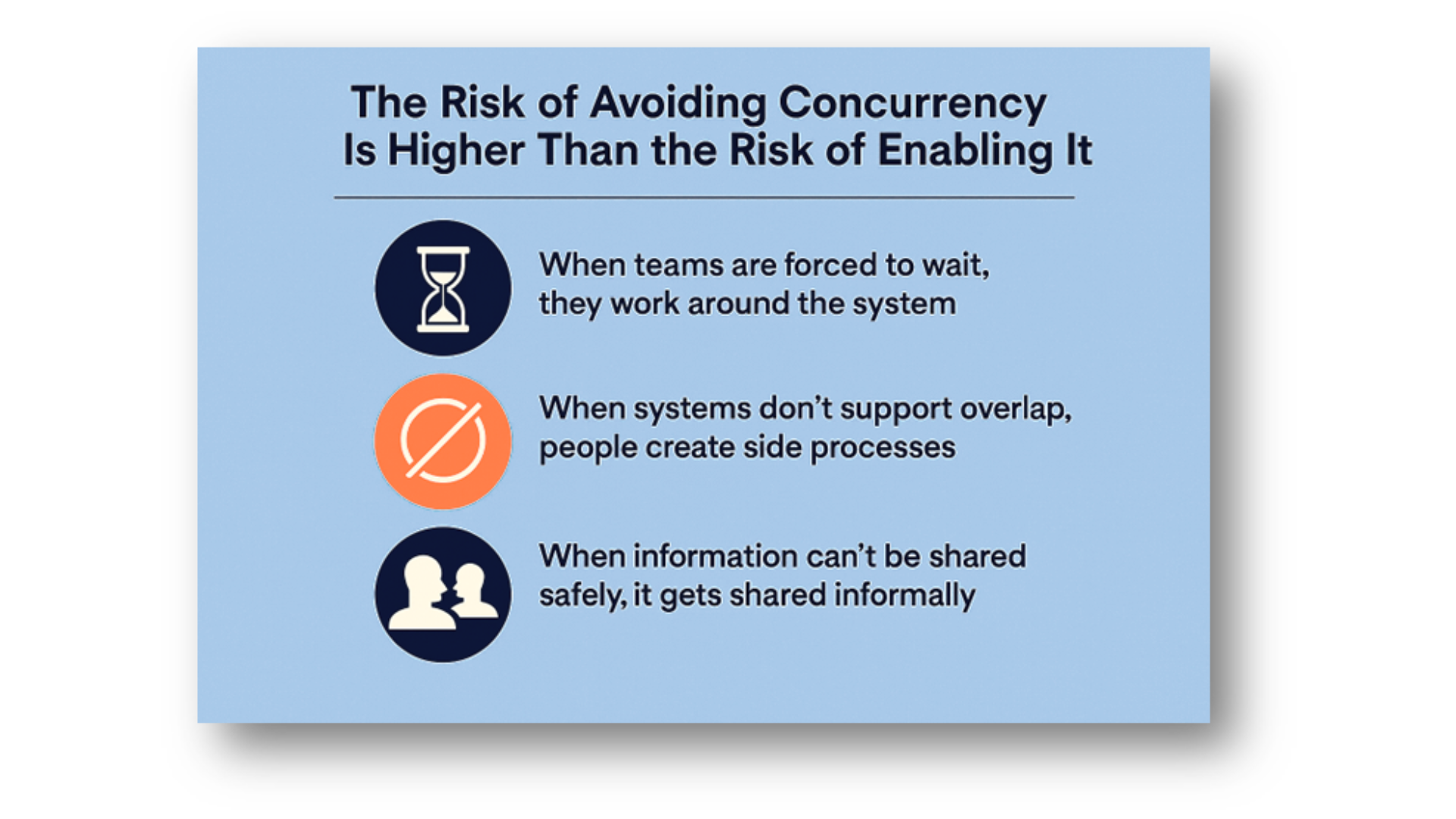
The Risk of Avoiding Concurrency Is Higher Than the Risk of Enabling It
Many organizations delay concurrent engineering because of fear — fear of errors, fear of overwrites, fear of losing control.
But avoiding concurrency doesn’t eliminate risk. It simply hides it.
- When teams are forced to wait, they work around the system
- When systems don’t support overlap, people create side processes
- When information can’t be shared safely, it gets shared informally
The real risk isn’t that too many teams are working at once.
The real risk is that they’re already doing it — without visibility or governance.
Concurrent engineering, done correctly, doesn’t increase exposure. It reduces it by bringing parallel work back under control.
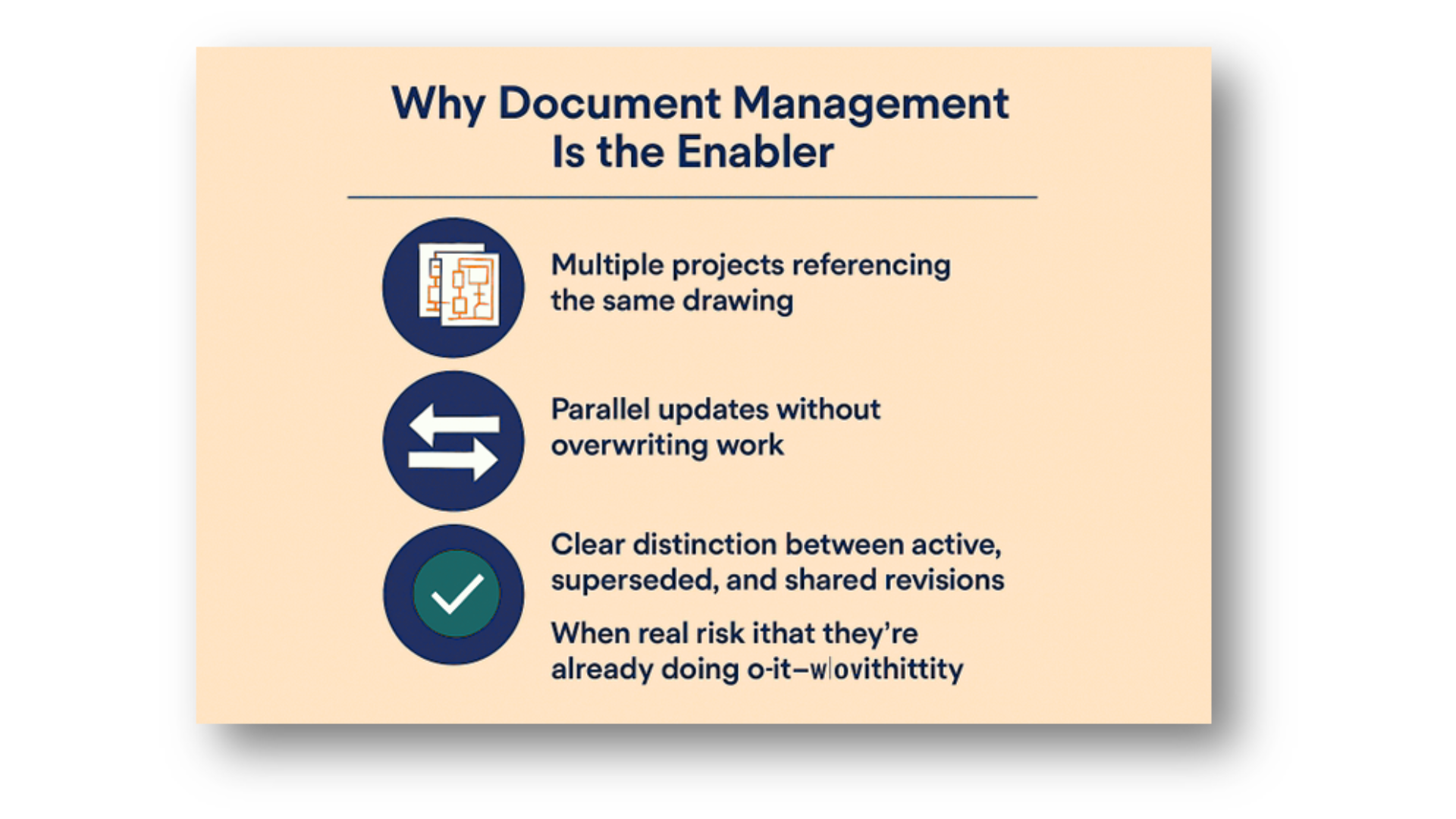
Why Document Management Is the Enabler
Concurrent engineering in oil & gas doesn’t start with people — it starts with how drawings and documents are managed.
Modern document management systems must support:
- Multiple projects referencing the same drawing
- Parallel updates without overwriting work
- Clear distinction between active, superseded, and shared revisions
- Confidence for both capital and operations teams
This is where platforms like Accruent Meridian 2025 aren’t about speeding people up — they’re about making parallel work safe.
By supporting shared references, controlled revisions, and clear lineage, they allow teams to move forward together without overwriting each other’s progress or compromising trust.
The result is confidence:
- Confidence for project teams to proceed without waiting
- Confidence for operations to rely on shared drawings
- Confidence for document control to maintain governance without becoming a bottleneck
When concurrency is supported by the system — not worked around — it stops being a risk and starts being an advantage.
Looking Ahead
Concurrent engineering isn’t about doing more work at once.
It’s about recognizing how work already happens — and building systems that support it responsibly.
In oil & gas, shared drawings are long-lived assets. They outlast projects, teams, and sometimes even facilities themselves. Managing them as if only one group touches them at a time is no longer realistic.
In the next post of this series, we’ll unpack one of the biggest hidden risks in capital and operations today:
shared drawings copied across projects — and why that habit quietly undermines safety, cost, and schedule.
Unlock expert insights: connect with SolidCAD today!
Discover how SolidCAD Insights can accelerate your business growth and transformation. From industry trends to practical strategies, our experts are here to help. Contact us today to discuss your needs and explore solutions tailored to your business.
%20(3).png)