
.png)

%20(1).png)
Technology | Consulting
The Drawing That Stopped Production: Why Engineering Information Has Become Mining's Most Valuable Asset
Discover how effective engineering information management can enhance mining operations, reduce downtime, and improve decision-making in today's automated environment.
-1.png?width=40&name=Empowering%20Transformation%20-%20logo%20transition%20animation%20(7)-1.png)
SolidCAD 31 Jul 2026
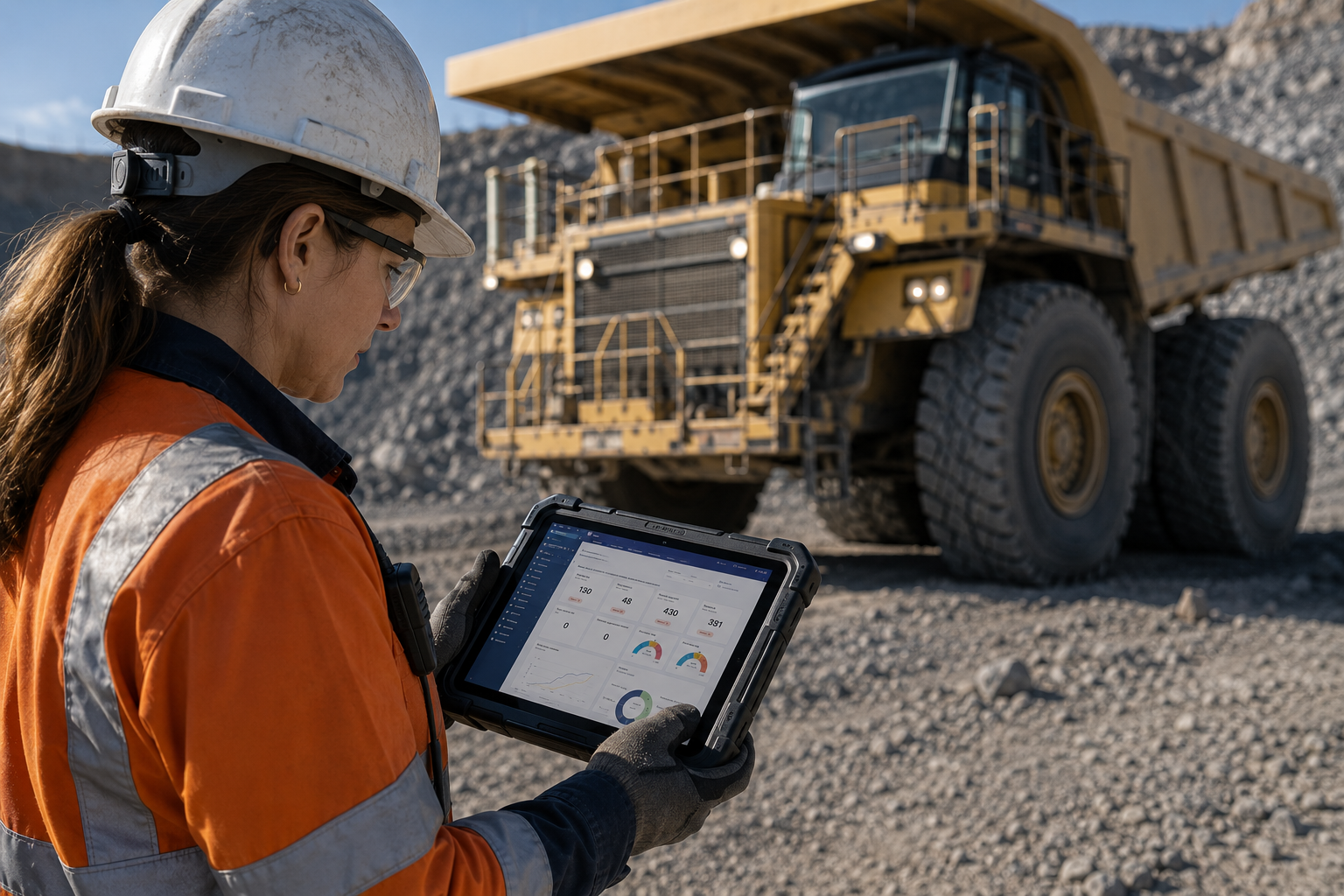
Where Engineering Knowledge Begins: Why Mining Operations Depend on Trusted Engineering Information
Every mining operation relies on physical assets to keep production moving. Haul trucks transport material around the clock, crushers and mills process thousands of tonnes each day, and conveyors connect every stage of the operation.
Yet one of the most valuable assets in a modern mine isn't physical at all—it's engineering information.
When equipment fails, maintenance teams are expected to respond quickly. They gather the necessary drawings, operating procedures, and equipment documentation before beginning repairs. In theory, this should be a straightforward process.
In reality, many organizations still manage engineering documents across shared drives, email attachments, contractor submissions, and paper archives. Finding the correct information often becomes the first challenge, long before the repair itself begins.
When the Drawing Is the Problem
Consider a common scenario.
A conveyor feeding the primary crusher unexpectedly shuts down during the morning shift. Electricians retrieve the latest electrical schematic from one location. Mechanical technicians locate an assembly drawing from another. A contractor references a PDF they received several weeks earlier. Meanwhile, engineering has a newer revision stored elsewhere, and someone arrives with a marked-up paper drawing from the last shutdown.
Before anyone can begin work, the team must answer one critical question: Which version is correct?
This uncertainty introduces delays that have nothing to do with mechanical failure. Production waits while teams verify revisions, confirm engineering changes, and determine whether modifications have been properly documented.
In many cases, the equipment isn't the reason operations have stopped—it's the inability to trust the information surrounding it.
Engineering Information Has Become an Operational Asset
As mining operations become increasingly automated and interconnected, engineering documentation has evolved from a project deliverable into an operational asset.
Drawings, electrical schematics, P&IDs, equipment manuals, vendor documentation, and standard operating procedures are no longer static records created during construction. They are living resources that maintenance, engineering, and operations teams rely on every day to make informed decisions.
Bringing Order to Engineering Information
This is where an Engineering Document Management System (EDMS) such as Accruent Meridian changes the way organizations manage engineering information.
Rather than storing documents across multiple locations, Meridian establishes a centralized, controlled repository where every engineering document is managed throughout its lifecycle.
Key capabilities include:
- Centralized engineering document repository
- Version control with approved revisions
- Configurable review and approval workflows
- Controlled document lifecycle management
- Secure access for internal teams and contractors
Version control ensures employees and contractors are always working from the latest approved revision, while configurable workflows manage reviews, approvals, and document changes before new information is released across the organization.
Connecting Documents to Physical Assets
The benefits extend well beyond document storage.
Meridian links engineering information directly to physical assets, creating a complete digital record for every piece of equipment in the operation.
A maintenance planner investigating a slurry pump, for example, can immediately access:
- Latest engineering drawings
- OEM manuals
- Maintenance procedures
- Historical modifications
- Supporting technical documentation
—all from a single location.
Instead of searching through multiple systems or contacting several departments, the information needed to diagnose and resolve the issue is readily available.
Strengthening Management of Change
This connected approach also strengthens Management of Change (MoC).
Every equipment upgrade, process modification, or infrastructure expansion generates new engineering information that must be reviewed, approved, and communicated across the organization.
Without structured document control, outdated drawings can remain in circulation long after equipment has changed, increasing operational risk and creating potential safety concerns.
Meridian maintains a complete audit trail of revisions and approvals, ensuring only current documentation is available to field personnel.
Better Shutdowns and Capital Projects
The value becomes particularly apparent during shutdowns and capital projects.
Large maintenance events often involve internal teams, engineering consultants, and external contractors working simultaneously across hundreds of assets.
When everyone accesses information from the same controlled environment:
- Coordination improves
- Engineering conflicts are reduced
- Work progresses more efficiently
- Project handovers become smoother
As-built drawings, commissioning documentation, and vendor manuals are incorporated into a structured digital repository instead of being scattered across multiple file systems.
Compliance Is Only the Beginning
Many organizations initially invest in engineering document management to support regulatory compliance.
However, the operational benefits often deliver the greatest return.
Reducing the time required to locate documentation, eliminating uncertainty around drawing revisions, and providing maintenance teams with immediate access to trusted engineering information can significantly reduce downtime over the life of a mining operation.
Digital Transformation Starts with Trusted Information
Mining companies continue to invest heavily in predictive maintenance, automation, and digital transformation to improve operational performance.
However, these initiatives depend on one fundamental requirement:
Accurate, trusted engineering information.
Without it, even the most advanced technologies struggle to deliver their full value.
Conclusion
Ultimately, the question isn't whether a mine possesses the information required to operate safely and efficiently. Most organizations already do.
The real question is whether employees can find the right information, trust that it is current, and use it confidently when production depends on it.
When engineering information becomes as reliable as the assets it supports, maintenance decisions happen faster, projects are executed more effectively, and operations spend less time searching for answers—and more time keeping the mine moving.
Unlock expert insights: connect with SolidCAD today!
Discover how SolidCAD Insights can accelerate your business growth and transformation. From industry trends to practical strategies, our experts are here to help. Contact us today to discuss your needs and explore solutions tailored to your business.
%20(3).png)