
.png)

%20(1).png)
Engineering Change Without Chaos: How Management of Change Protects Mining Operations
Discover how effective Management of Change in mining operations enhances safety, efficiency, and compliance by keeping engineering documentation synchronized with reality.
-1.png?width=40&name=Empowering%20Transformation%20-%20logo%20transition%20animation%20(7)-1.png)
SolidCAD 5 Aug 2026
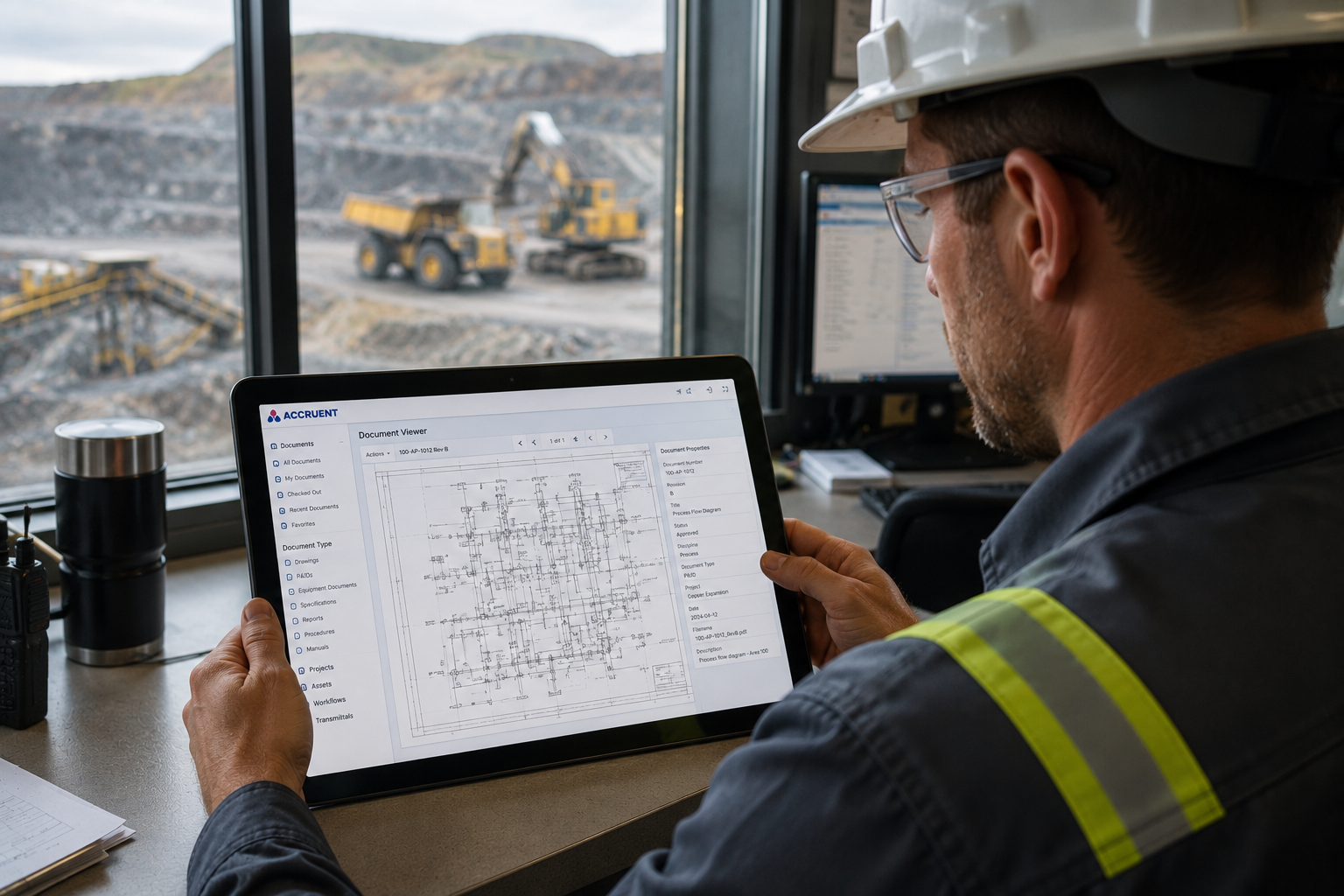
Management of Change in Mining: Keeping Engineering Information Aligned with Operational Reality
Mining operations are constantly evolving. Equipment is upgraded to improve efficiency, processing plants are expanded to increase capacity, electrical systems are modernized, and new technologies are introduced to support automation and digital transformation. Change is not the exception in mining—it is a fundamental part of operating a competitive business.
The challenge is that every engineering change creates a ripple effect across the organization. A new pump may require updated electrical drawings. A relocated pipeline may affect operating procedures. A control system upgrade may change maintenance schedules, vendor documentation, and isolation procedures. If even one of these changes is not properly documented, the consequences can extend far beyond engineering.
This is why Management of Change (MoC) has become one of the most important disciplines in modern mining operations.
Many organizations have formal Management of Change processes in place, yet the engineering information supporting those processes often remains fragmented. Drawings may be updated in one system, while maintenance procedures are stored elsewhere. Contractors may complete field modifications before final documentation is approved, and operations may unknowingly continue using obsolete procedures because supporting documents were never distributed.
The result is not simply administrative inefficiency—it is operational risk.
Imagine a processing plant where a series of piping modifications were completed during a scheduled shutdown. The work was successful, production resumed on schedule, and the project was considered complete. Several months later, maintenance crews respond to an issue involving one of the modified systems. The engineering drawings they reference do not reflect the changes made during the shutdown, while another version exists on a contractor's network drive. The field installation no longer matches the approved documentation.
No equipment has failed.
No procedures have been ignored.
Yet maintenance has already slowed because the engineering information cannot be trusted.
These situations are more common than many organizations realize. Engineering changes happen continuously across mining operations, and every undocumented modification increases the gap between the physical asset and the engineering record that supports it.
An effective Management of Change program ensures that engineering documentation evolves alongside the operation. Every approved modification should trigger updates to drawings, procedures, equipment records, and supporting documentation before those changes become part of day-to-day operations.
This is where engineering information management platforms such as Accruent Meridian play a critical role.
Rather than treating document updates as a separate administrative task, Meridian integrates engineering document control directly into the Management of Change process. Every proposed modification follows a controlled workflow from review and approval through implementation and final publication, ensuring that field personnel always have access to the latest approved information.
Instead of relying on manual processes and disconnected file storage, organizations can build a digital workflow that keeps engineering information synchronized with operational reality.
Key Management of Change Capabilities
Controlled Engineering Change Workflows
Route engineering changes through configurable review and approval processes before documentation is released for operational use.
Automated Version Control
Maintain a single approved version of every engineering document while preserving complete revision histories for future reference.
Revision Tracking
Clearly identify what changed, when the change occurred, and who approved it, providing complete traceability throughout the document lifecycle.
Digital Markups and Redlining
Capture engineering comments, design reviews, and field changes electronically before formal revisions are issued.
Approval Notifications
Automatically notify relevant stakeholders when updated documentation becomes available, ensuring departments work from the latest information.
Document Relationships
Link related drawings, procedures, specifications, and manuals so supporting documentation is updated together rather than independently.
Engineering Audit Trails
Maintain permanent records of approvals, revisions, and document activity to support compliance and internal governance.
Role-Based Permissions
Ensure engineers, maintenance teams, contractors, and operations personnel access the appropriate documentation based on their responsibilities.
Integration with Asset Information
Associate engineering changes directly with physical equipment so maintenance teams understand exactly which assets have been modified.
Secure Collaboration
Allow engineering consultants and contractors to participate in document reviews while maintaining governance over controlled engineering information.
Benefits Beyond Engineering
The benefits extend well beyond engineering. Maintenance planners gain confidence that work packages reference current documentation. Operations personnel know procedures reflect actual field conditions. Reliability engineers investigating equipment failures can review the complete history of previous modifications. Contractors work from controlled documentation rather than outdated drawing packages that may have been distributed months earlier.
Management of Change also plays a significant role in regulatory compliance. Mining organizations operate under strict safety and environmental regulations that require accurate engineering documentation and demonstrable control over operational changes.
During audits, organizations must often demonstrate when changes occurred, who approved them, and how supporting documentation was updated. Maintaining a complete digital audit trail simplifies this process and reduces the administrative effort required to prepare for inspections.
Perhaps the greatest value of Management of Change, however, is consistency. Mining operations involve thousands of interconnected assets, multiple engineering disciplines, and numerous internal and external stakeholders. Without structured processes, even small engineering changes can create confusion as different departments unknowingly work from different versions of the truth.
Organizations that successfully integrate Management of Change with engineering information management create a more resilient operation. Engineering changes become transparent rather than disruptive. Documentation evolves alongside physical assets. Maintenance teams spend less time verifying information and more time performing productive work. Most importantly, operational decisions are based on information that accurately reflects the mine as it exists today—not as it existed several projects ago.
As mining companies continue investing in automation, electrification, and digital transformation, the pace of engineering change will only accelerate. The organizations that manage those changes most effectively will not simply complete projects faster—they will preserve the integrity of the engineering information that supports every decision made long after the project is complete.
Unlock expert insights: connect with SolidCAD today!
Discover how SolidCAD Insights can accelerate your business growth and transformation. From industry trends to practical strategies, our experts are here to help. Contact us today to discuss your needs and explore solutions tailored to your business.
%20(3).png)