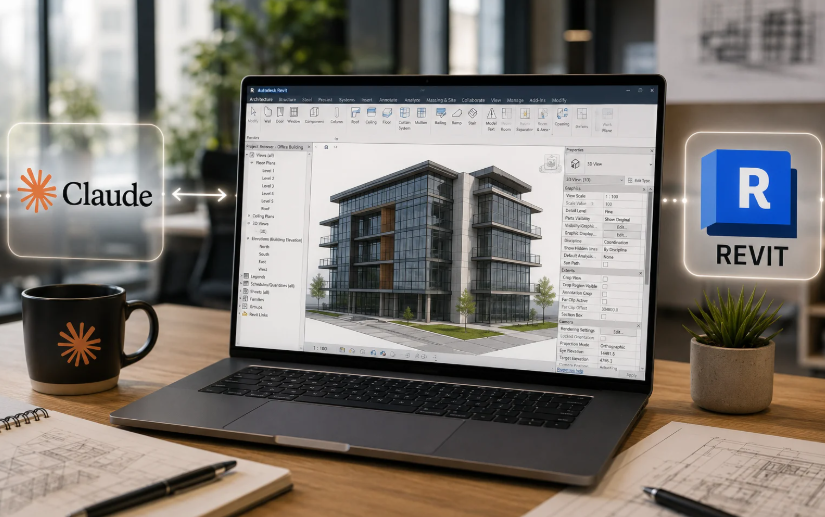
Artificial intelligence is moving beyond chatbots and becoming part of real BIM project delivery. By connecting AI tools with Autodesk Revit through Model Context Protocol (MCP), architecture, engineering and construction teams can automate repetitive work, improve model quality and accelerate production.
MCP is an open standard that allows AI applications to connect securely with external software, data and tools. When paired with the Revit API, it enables an AI assistant to interpret plain-language requests and translate them into actions inside a BIM environment.
Instead of navigating multiple menus or manually repeating the same commands, a user could ask the AI to create model elements, update parameters, organize views or inspect project information. The AI interprets the request, selects the appropriate Revit tools and carries out the approved action.
Turning Repetitive Tasks into Automated Workflows
AI-powered Revit automation can support many time-consuming BIM activities, including:
- Creating and modifying model elements
- Updating parameters across multiple objects
- Applying naming and documentation standards
- Identifying missing or inconsistent information
- Extracting model data for reports
- Supporting quality-control checks
This allows BIM professionals to spend less time on routine production work and more time on design, coordination and decision-making. It can also help organizations apply standards more consistently across projects.
Building a More Productive BIM Practice
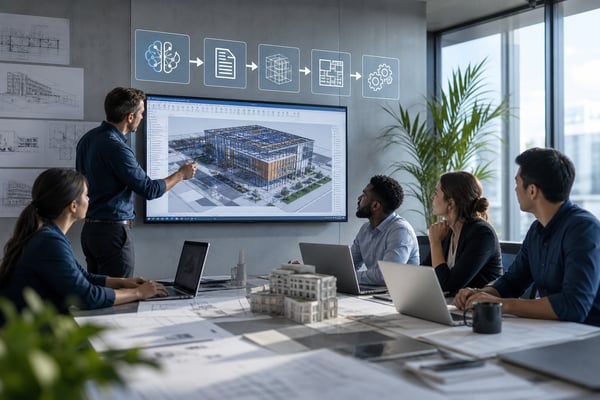
Successful AI adoption requires more than connecting a chatbot to Revit. Organizations need clearly defined workflows, reliable model standards, appropriate permissions and human oversight. AI-generated actions should remain transparent, reviewable and aligned with project requirements.
SolidCAD helps organizations identify practical opportunities for BIM automation and develop workflows that reflect how their teams actually work. With the right strategy, AI and MCP can transform Revit from a powerful modelling platform into a more responsive, automated production environment.
The future of BIM is not simply faster modelling. It is giving professionals better ways to turn their expertise into consistent, measurable project results.

.png)

%20(1).png)
-1.png?width=40&name=Empowering%20Transformation%20-%20logo%20transition%20animation%20(7)-1.png)
%20(3).png)