
.png)

%20(1).png)


In the previous post, we established a simple truth: concurrent engineering is already happening in oil & gas—whether systems are designed for it or not.
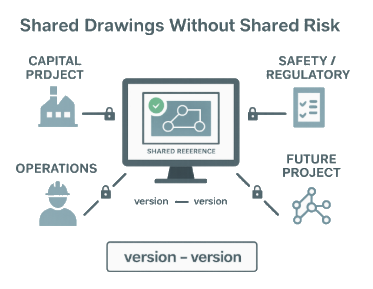
Projects overlap. Operations rely on the same drawings being modified by capital teams. Safety and regulatory groups reference the same information on different timelines. Shared drawings are no longer a future state—they are the present.
Yet there’s one quiet habit that undermines all that work. It doesn’t show up in schedules, it rarely appears in audits and most organizations don’t even treat it as a risk.
That habit is copying shared drawings across projects.
How Copying Becomes the Default
Most organizations don’t set out to fragment their technical information.
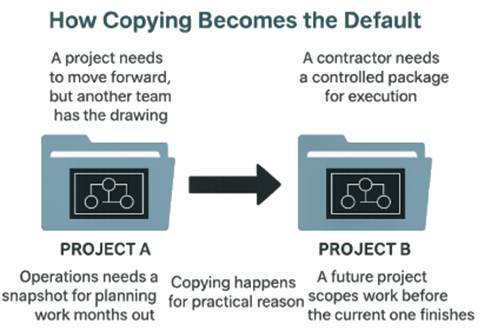
Copying happens for practical reasons:
- A project needs to move forward, but another team “has the drawing”
- Operations needs a snapshot for planning work months out
- A contractor needs a controlled package for execution
- A future project scopes work before the current one finishes
In a sequential model, copying feels harmless—sometimes even responsible. Each team gets “their version.” Everyone stays out of each other’s way. Work keeps moving. But the moment multiple copies exist, control quietly slips away.
What Breaks When Drawings Are Copied
Copied drawings don’t usually fail loudly. They fail gradually.
- Lineage Disappears
- Confidence Erodes Across Teams
- Risk Becomes Invisible
Once a drawing is copied:
- There is no longer a single source of truth
- Changes in one copy aren’t visible to others
- No system can reliably answer which version is current—or why
Even well‑managed revisions lose meaning when lineage forks.
Operations stops trusting issued drawings. Projects hedge by asking for confirmation. Document control becomes a traffic cop instead of a steward. The system doesn’t feel authoritative anymore—so people rely on personal judgment and local files instead. This isn’t cultural resistance.
It’s a rational response to uncertainty.
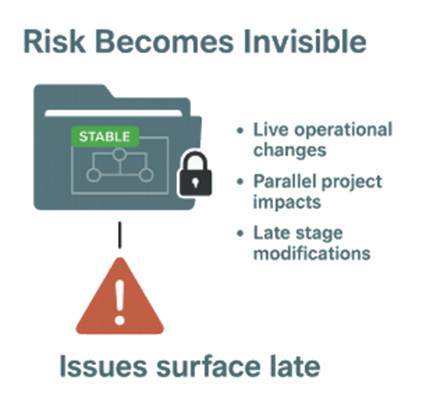
Copied drawings feel safer because they appear stable.
But they isolate teams from:
- Live operational changes
- Parallel project impacts
- Late‑stage modifications that affect safety or constructability
Issues surface late—during commissioning, start‑up, or audits—when they are most expensive to fix.
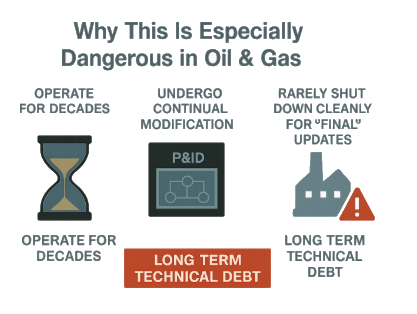
Why This Is Especially Dangerous in Oil & Gas
Unlike many industries, oil & gas assets:
- Operate for decades
- Undergo continual modification
- Rarely shut down cleanly for “final” updates
A P&ID copied today may still influence decisions years later.
What looks like a short‑term workaround becomes long‑term technical debt—quietly compounding risk with every project cycle.
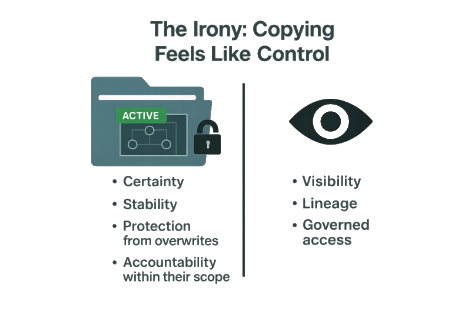
The Irony: Copying Feels Like Control
Here’s the paradox:
Many teams copy drawings to maintain control.
They want:
- Certainty
- Stability
- Protection from overwrites
- Accountability within their scope
But copying doesn’t create control—it removes it from the system and pushes it into individual hands.
True control isn’t about isolation.
It’s about visibility, lineage, and governed access.
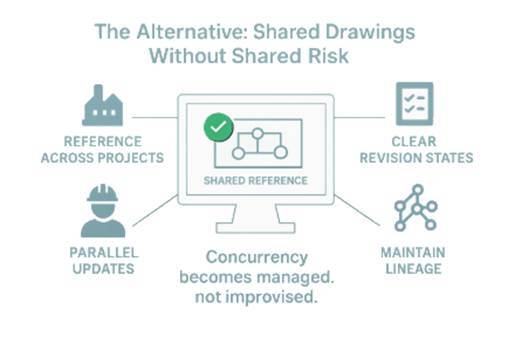
The Alternative: Shared Drawings Without Shared Risk
Avoiding copies does not mean forcing everyone into chaos.
Modern document management and information governance make it possible to:
- Reference the same drawing across multiple projects
- Allow parallel updates without overwriting
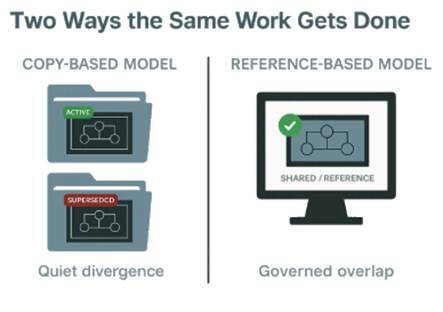
- Clearly distinguish active, superseded, and shared revisions
- Maintain full lineage across time and teams
In this model:
- Projects can move forward without waiting
- Operations can trust what they’re seeing
- Document control governs once—instead of chasing copies forever
Concurrency becomes managed, not improvised.
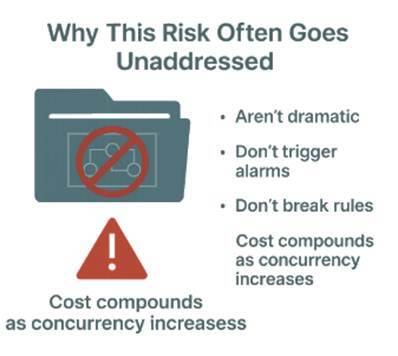
Why This Risk Often Goes Unaddressed
Copied drawings aren’t dramatic. They don’t trigger alarms. They don’t break rules—because many rules were written for a sequential world.
That’s why this risk persists even in well‑run organizations.
But as concurrency increases, the cost of ignoring it compounds.
What Comes Next
In the next post, we’ll look closer at:
- How copied drawings specifically undermine safety, cost, and schedule
- Why this risk often surfaces late—when it’s hardest to correct
- What organizations can do to transition from copy‑based control to lineage‑based governance
Because concurrent engineering doesn’t fail when people collaborate.
It fails when shared information isn’t treated as the long‑lived asset it truly is.
Unlock expert insights: connect with SolidCAD today!
Discover how SolidCAD Insights can accelerate your business growth and transformation. From industry trends to practical strategies, our experts are here to help. Contact us today to discuss your needs and explore solutions tailored to your business.
%20(3).png)