
.png)

%20(1).png)


Introduction
Most organizations do not invest in Bluebeam because they need another PDF tool. They invest in it because they are trying to improve how teams actually work together.
They want faster reviews, cleaner communication, better collaboration between project teams, more consistent markups, and fewer manual processes slowing projects down.
However, after implementation, many organizations realize something frustrating.
The software exists inside the business, but the workflows around it never fully matured.
One team uses custom toolsets while another barely uses markups consistently. Some users rely heavily on manual processes even though Bluebeam could automate portions of the work in seconds. Everyone technically has access to the same platform, yet nobody is truly using it the same way.
Over time, that inconsistency starts creating operational friction. Reviews take longer, collaboration becomes less efficient, rework increases, and project teams begin developing their own disconnected processes.
Usually, the issue is not the software itself.
The issue is that nobody ever had the time to properly structure how the organization should use it at scale.
That is where Bluebeam Launch and Bluebeam Optimize were designed to help.
The Reality of Most Bluebeam Environments
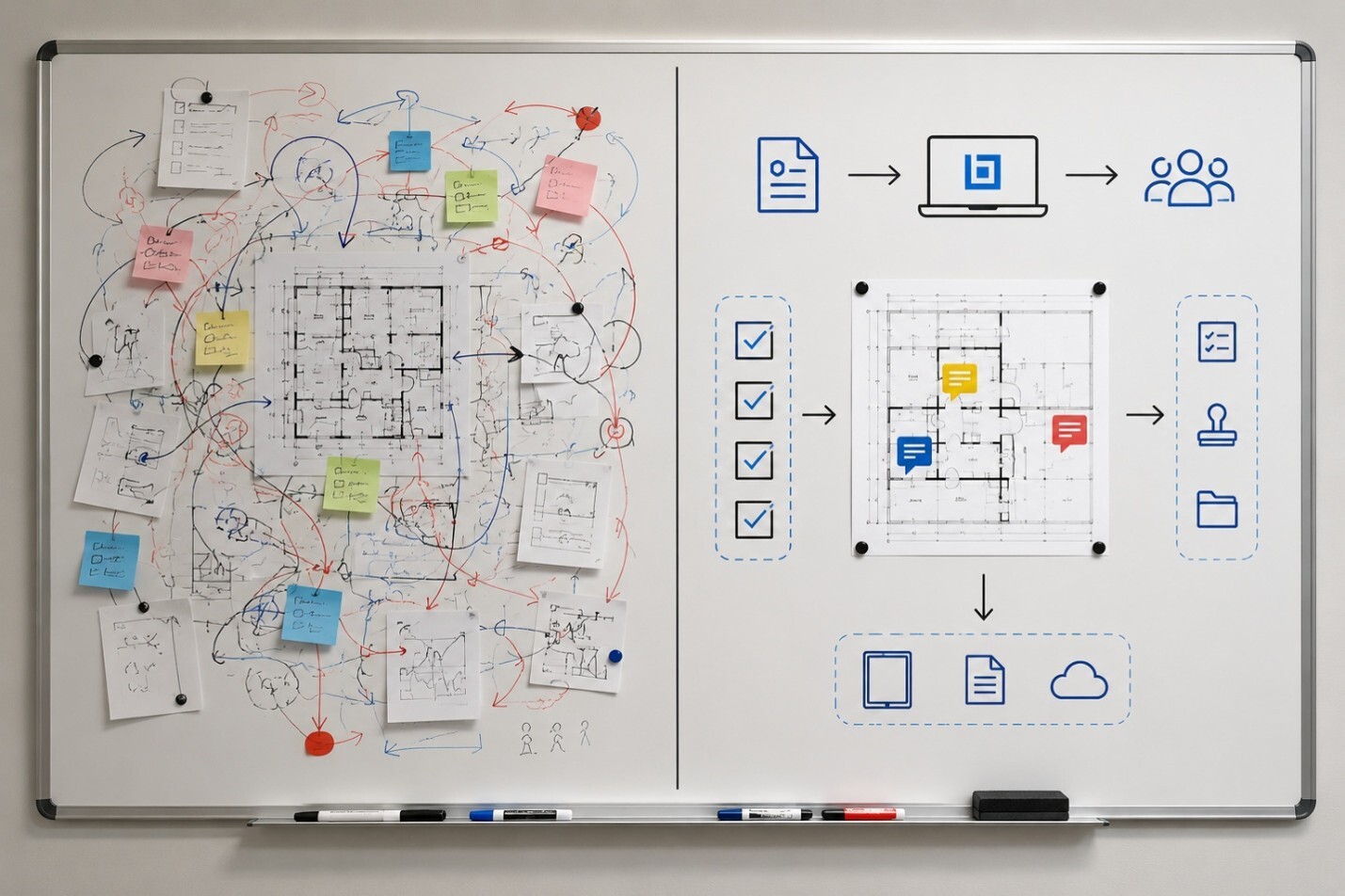
Most fragmented Bluebeam environments do not happen intentionally. They usually develop gradually over time.
Teams get busy. Projects move quickly. Users create their own shortcuts because deadlines matter more than long-term standardization in the moment.
Eventually, every department begins working slightly differently.
Templates vary between teams. Toolsets are inconsistent. Naming conventions change from project to project. Features that could improve productivity remain unused simply because nobody has had time to properly roll them out.
At first, these inconsistencies do not feel like major problems. However, over time they begin slowing teams down more than most organizations realize.
That slowdown often becomes visible in the form of duplicated effort, missed comments, inconsistent reviews, and frustration between teams trying to collaborate differently inside the same platform.
What Is Bluebeam Launch?
Bluebeam Launch is designed for organizations implementing or rolling out Bluebeam for the first time. The purpose is to help teams get operational quickly and consistently without implementation becoming overwhelming or unnecessarily drawn out.
Most teams are already busy managing projects, deadlines, and day-to-day responsibilities. The last thing they want is another rollout that turns into months of meetings and configuration changes before users can actually begin working productively.
Bluebeam Launch helps organizations establish a cleaner starting point by creating standardized workflows, consistent toolsets, structured onboarding processes, and more organized implementation practices from the beginning.
That consistency matters more than many organizations initially realize because early implementation decisions often shape how teams continue using the platform for years afterward.
When organizations start from a stronger operational foundation, adoption becomes smoother and workflows become easier to scale across projects and departments.
What Is Bluebeam Optimize?
Bluebeam Optimize is designed for organizations already using Bluebeam but not fully leveraging everything the platform can offer.
And honestly, that situation is incredibly common.
Most teams are so focused on delivering projects that they rarely have time to step back and rethink how they are actually using the software.
As a result, manual processes quietly become normal. Teams continue relying on inefficient review methods, duplicated markups, disconnected workflows, and inconsistent standards simply because those habits were never revisited after implementation.
Eventually, leadership starts noticing that productivity feels inconsistent across teams. Some users are highly efficient while others continue struggling with workflows that should already be streamlined.
That is usually when organizations begin asking an important question:
“We own the software, but are we actually getting the value we expected from it?”
Bluebeam Optimize focuses on helping organizations answer that question properly by improving workflows, increasing consistency, expanding feature adoption, and reducing unnecessary operational friction.
Why Standardization Matters More Than People Think
Most workflow problems are not caused by a lack of effort from teams. They happen because organizations never established a consistent framework for how the platform should be used.
Without standards, every project begins operating slightly differently. Reviews become harder to track, onboarding becomes inconsistent, collaboration slows down, and adoption varies from team to team.
Over time, workflows become dependent on individuals instead of structured operational processes.
That becomes difficult to scale.
Especially for growing organizations trying to improve consistency across departments, project teams, and offices.
Bluebeam Optimize focuses on reducing that friction so teams can work more efficiently, collaborate more consistently, and spend less time fighting disconnected processes.
The Goal Is Not More Software. It Is Less Friction.
At the end of the day, most organizations are not looking for more complexity added into their operations.
They are looking for workflows that feel smoother, faster, and easier for teams to actually follow.
That is the real purpose behind both Bluebeam Launch and Bluebeam Optimize.
These Foundation Packs are designed to help organizations move from inconsistent workflows toward more structured and scalable operational practices without implementation becoming another exhausting internal project.
Get More From Bluebeam
Whether you are rolling out Bluebeam for the first time or trying to improve an existing environment, Foundation Packs provide a more structured path forward.
Frequently Asked Questions
Why aren't teams getting full value from Bluebeam?
Most teams underuse Bluebeam not because of the software itself, but because the workflows around it were never properly structured. Inconsistent toolsets, informal processes, and lack of standardization across teams gradually create operational friction that slows projects down.
What is the difference between Bluebeam Launch and Bluebeam Optimize?
Bluebeam Launch is designed for organizations implementing Bluebeam for the first time, helping teams get operational quickly with standardized workflows, consistent toolsets, and structured onboarding. Bluebeam Optimize is designed for organizations already using Bluebeam but not fully leveraging its capabilities — focusing on workflow improvement, feature adoption, and consistency across teams.
How do I know if my team needs Bluebeam Launch or Bluebeam Optimize?
If your organization is new to Bluebeam or rolling it out for the first time, Bluebeam Launch is the right starting point. If your team already has Bluebeam deployed but workflows feel inconsistent, manual processes are still common, or adoption varies across departments, Bluebeam Optimize is the better fit.
Why does Bluebeam standardization matter?
Without a consistent framework for how Bluebeam should be used, every project starts operating slightly differently. Reviews become harder to track, onboarding becomes inconsistent, and collaboration slows down. Standardization ensures teams work from the same foundation — making workflows easier to scale as your organization grows.
How long does it take to see results with Bluebeam Launch or Optimize?
Both packages are structured for fast, predictable delivery. Bluebeam Launch is typically completed within 2 to 3 weeks, while Bluebeam Optimize takes 3 to 5 weeks depending on the complexity of existing workflows. Both are delivered remotely across Canada.
Can Bluebeam Optimize help if teams have already developed bad habits?
Yes. Bluebeam Optimize is specifically designed for environments where informal processes and inconsistent habits have built up over time. The package helps organizations revisit how Bluebeam is being used, introduce proper standards, and reduce the friction caused by disconnected workflows.
Unlock expert insights: connect with SolidCAD today!
Discover how SolidCAD Insights can accelerate your business growth and transformation. From industry trends to practical strategies, our experts are here to help. Contact us today to discuss your needs and explore solutions tailored to your business.
%20(3).png)